
Palm Springs City Directory Shelf and Runs
The verified Palm Springs directory set is real but discontinuous. Palm Springs Public Library and local historic studies document volumes for 1938, 1941, 1943 through 1948, 1950 through 1959, and 1961 through 1964. A 1952 volume is attributed to Pacific Directory Company. The 1964 “Season Directory - The Yellow Book” was made by Western Directory Co. through a house-to-house canvass. Treat the gaps as part of the evidence.
| Collection | Years | Where Held | Access |
|---|---|---|---|
| Palm Springs directory volumes | 1938, 1941, 1943-48, 1950-59, 1961-64 | Palm Springs Public Library and Accessing the Past | Local research; gaps remain |
| 1952 directory | 1952 | Pacific Directory Company volume cited in city historic research | Verify through the library collection |
| Season Directory - The Yellow Book | 1964 | Western Directory Co.; digitized PDF reference | Alphabetical residents, business and civic material |
| Regional telephone directories | 1950; Dec. 1951-Dec. 1956; Dec. 1957-Jan. 1961 | Library of Congress and library research | Free page images and OCR where available |
| Desert Sun | 1934-1993 | California Digital Newspaper Collection and library link | Full-text date, name, and address search |
The collection table does not establish an absolute first or final printed year. A year may be absent because the run is incomplete, a volume is held elsewhere, or a digitized item needs an interactive check. Do not interpolate a missing edition.
The 1952 Pacific Directory Marker
The Pacific Directory Company reference gives the Palm Springs shelf a concrete publisher marker. It helps separate a cited local volume from a generic directory search. Preserve the publisher, year, title, and library finding aid together. If a scan or catalog record lacks a page, call number, or item-rights statement, treat the item as a research lead until the library confirms access.
Palm Springs became a city in 1938, while Riverside County dates to 1893. The local city directory era therefore begins after incorporation, and earlier people or land questions may appear in county, tribal, federal, newspaper, or private records instead. A directory entry gives a place and time. It does not replace a deed, census, court file, or vital certificate.
That distinction matters for a family-history search. A printed name can be a lead to an address, spouse clue, business, or phone number, but the next step should be a second source dated near the same period.
Reading a Palm Springs Directory Entry
A Palm Springs city directory entry should be read as a compact set of printed fields. Library of Congress page images and OCR show forms such as “Brady Helen Mrs r 172 S Indian Av” and “Christy Geo N 487 W Arenas Rd P Spgs 5186.” The visible clues include a surname, given name or initial, honorific, residence marker, house number, directional street abbreviation, locality shorthand, and sometimes a telephone number. A professional entry may add a title and a business building.
| Name | Printed surname, given name, initials, and honorific as they appeared in that edition. |
|---|---|
| Residence mark | The letter “r” can identify a residence line; never expand an abbreviation without checking the volume key. |
| Address | House number, directional marker, street abbreviation, and Palm Springs locality form. |
| Telephone | A number tied to the printed listing and publication period, not a current contact. |
| Printed role | A professional title or business location when the entry supplies one; it is not automatic residence proof. |
- Criss-cross section
- A street-order section that may connect an address to a listed name when that volume includes it.
- Householder index
- A name or household finding aid used to reach a longer entry or address section.
- Abbreviation key
- The volume’s own guide to marks and short forms; photograph or transcribe it before reading entries.
Spouse, widow, and owner or renter marks were not independently verified in the exact Palm Springs volumes inspected. Do not import conventions from another city or publisher.
The 1964 Yellow Book Canvass
The 1964 Yellow Book is an especially useful Palm Springs volume because its description records a house-to-house canvass. That detail explains both its value and its limit. It may contain residents and businesses that are absent from a deed index, yet a canvass can still miss a person, record a name imperfectly, or capture a seasonal presence. Its disclaimer makes a second source essential.
Use the Yellow Book to normalize a street abbreviation, locate a household at a date, or identify a phone number that can lead to a newspaper or family record. Then compare the entry with the 1960-era telephone run, a Desert Sun notice, a deed, a permit, or a released census schedule. A single printed line should open a search, not close one.
Palm Springs directory gaps also overlap a complicated local history. Riverside County’s creation, the city’s incorporation, seasonal resort patterns, and documented government displacements all affect whether a name appears in a given volume.
| 1938 | Palm Springs incorporates; the verified local directory run begins in the city era. |
|---|---|
| 1952 | Pacific Directory Company is the publisher marker cited in local historic research. |
| 1964 | Western Directory Co. publishes the Season Directory - The Yellow Book with a house-to-house canvass description. |
| After 1964 | No final printed year was established in the research; do not infer one from the gap. |
Accessing the Past Beyond One City Directory
Accessing the Past is a City, Library, and California State Library partnership. Its searchable material includes photographs, directories, social registers, newspapers, manuals, blueprints and plans, maps, yearbooks, phone books, documents, and artifacts. It is broader than a Palm Springs local volume, which makes it useful when a name or address appears in one source but not another. Research access does not automatically grant republication rights.
The digitized Palm Springs directory collection search is a starting point for online items and rights review.
Keep a scan’s catalog wording and rights note beside any transcription made for family research.
Palm Springs Public Library also offers genealogy resources, Ancestry Library Edition onsite, HeritageQuest, digitized Desert Sun material, high-school yearbooks, phone directories, interlibrary loan, and librarian help. The library lists 760-322-7323 and states that librarian email replies usually take one to two business days. The Accessing the Past overview explains the partnership, while item years still need interactive enumeration before a complete year list is claimed.
Palm Springs Phone Books at LOC
Library of Congress telephone collections supply a separate route into Palm Springs phone-book research. The verified runs include 1950, December 1951 through December 1956, and December 1957 through January 1961. Page images and OCR can reveal a printed name, residence mark, address, locality abbreviation, telephone number, and a business or professional location. Search initials, honorifics, and OCR variants rather than one exact spelling.
A phone book and a local volume are related but not identical. A phone entry depends on telephone listing practice and may omit an unlisted or seasonal household. The address line can still be carried into the county property, recorder, GIS, permit, and newspaper sources. Preserve the page date because a number and a street entry can change between editions.
The Library of Congress material is best used as a dated bridge. It can connect a name to a likely street, while the local library and Historical Society can supply photographs, social registers, manuscripts, and other context.
Palm Springs History Has Directory Gaps
The Palm Springs volumes document an uneven run from 1938 through 1964, not a seamless annual record. Riverside County’s creation in 1893 sends earlier county questions to predecessor descriptions. Palm Springs incorporated in 1938, so municipal evidence before that date is not likely to be a city-held volume. The local record landscape also includes Agua Caliente homeland, tribal and federal land layers, and a seasonal resort pattern that can affect a printed listing.
A missing name has several possible meanings: a person moved, died, used a different name, stayed seasonally, was missed by the canvass, fell into an unverified volume gap, or is hidden by an OCR error. The correct report is “not found in the checked edition.” The wrong report is “the person did not live in Palm Springs.”
That cautious wording makes the collection useful for genealogy rather than rumor. It leaves room for a later obituary, deed, probate petition, census entry, or oral history to refine the trail.
Palm Springs City Directories and Census Years
Federal census schedules add a household snapshot that a Palm Springs local volume cannot provide by itself. The National Archives releases census material after a 72-year rule, making 1950 the latest released census as of 2026. Pair the closest directory edition with the matching census year, but allow for a publication or canvass lag. A person may appear in a directory before or after the census date, and a household may use a shortened name in print.
The National Archives census research page is the authoritative access point for the release rule and census records.
Use the census as a dated household check, not as a replacement for the volume’s address and phone fields.
- Copy the exact name, address, initials, and residence mark from the directory.
- Check the nearest released census and note household members, age, and address form.
- Compare a second directory edition to see whether the name or street changes.
- Use Desert Sun notices, deeds, permits, or probate to test a move, death, or family connection.
- Record the source date and keep an unresolved mismatch instead of forcing two same-name people together.
The Desert Sun and Historical Society Trail
The Desert Sun run from 1934 through 1993 is a strong companion to the Palm Springs local volumes. Full-text search can surface obituaries, marriage and social notices, clubs, legal notices, and address context. A newspaper item is a lead, not a certified event record. Compare it with the appropriate custodian when the fact matters.
The Palm Springs Historical Society is the manifest source for the local archive and appointment-based research route.
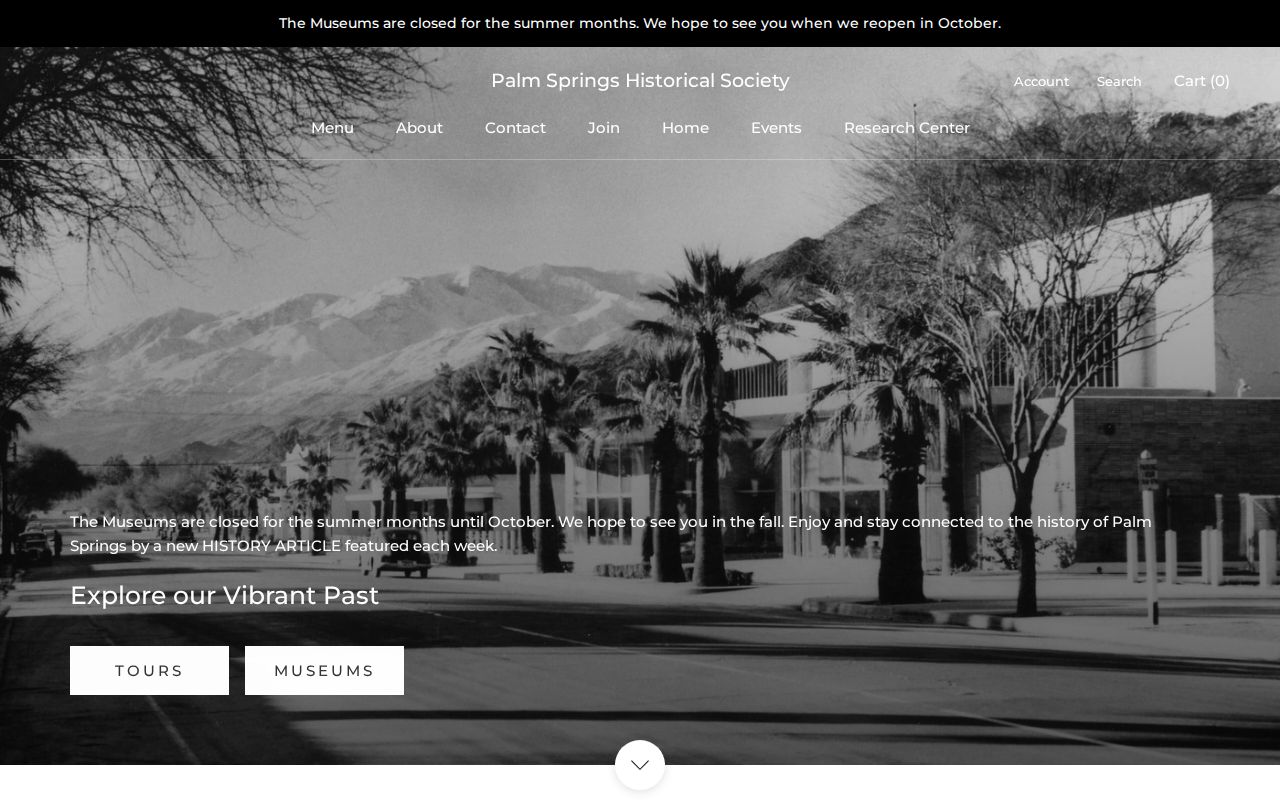
Photos, books, periodicals, manuscripts, and maps can explain an address without pretending to be a current resident roll.
The Research Center is at Welwood Murray Memorial Library, 100 S Palm Canyon, by appointment. The Prickly Pear Collection adds recorded interviews with residents, including Cahuilla elders. Together, the newspaper and archive can help distinguish a seasonal listing, a changed name, and a local story that never reached an official index.
Using Palm Springs Directories for Family History
A family-history search should follow a name across editions while treating every address as a dated clue. Begin with the exact printed form, then normalize only after the volume’s key and nearby entries have been checked. A household may appear under one person in one year, a spouse or relative in another, and a shortened or misspelled form in OCR. The goal is a chain of independent points rather than a polished story made from one line.
- Find the first checked Palm Springs city directory entry and save its page, date, and printed spelling.
- Follow the name through the next available editions, noting every address and abbreviation change.
- Use a reverse section only when the volume contains one, then inspect nearby entries for household or street context.
- Pair the directory years with the released 1940 or 1950 census and allow for publication lag.
- Close the trail with Desert Sun, probate, deeds, permits, an obituary, or a Historical Society source.
For a modern confirmation, a directory clue can move into a narrow Palm Springs resident lookup. For a street or parcel question, use the by-address records instead. The city directory owns the historical shelf, and its gaps should stay visible in the final account.